The Typewriter and Other Headaches
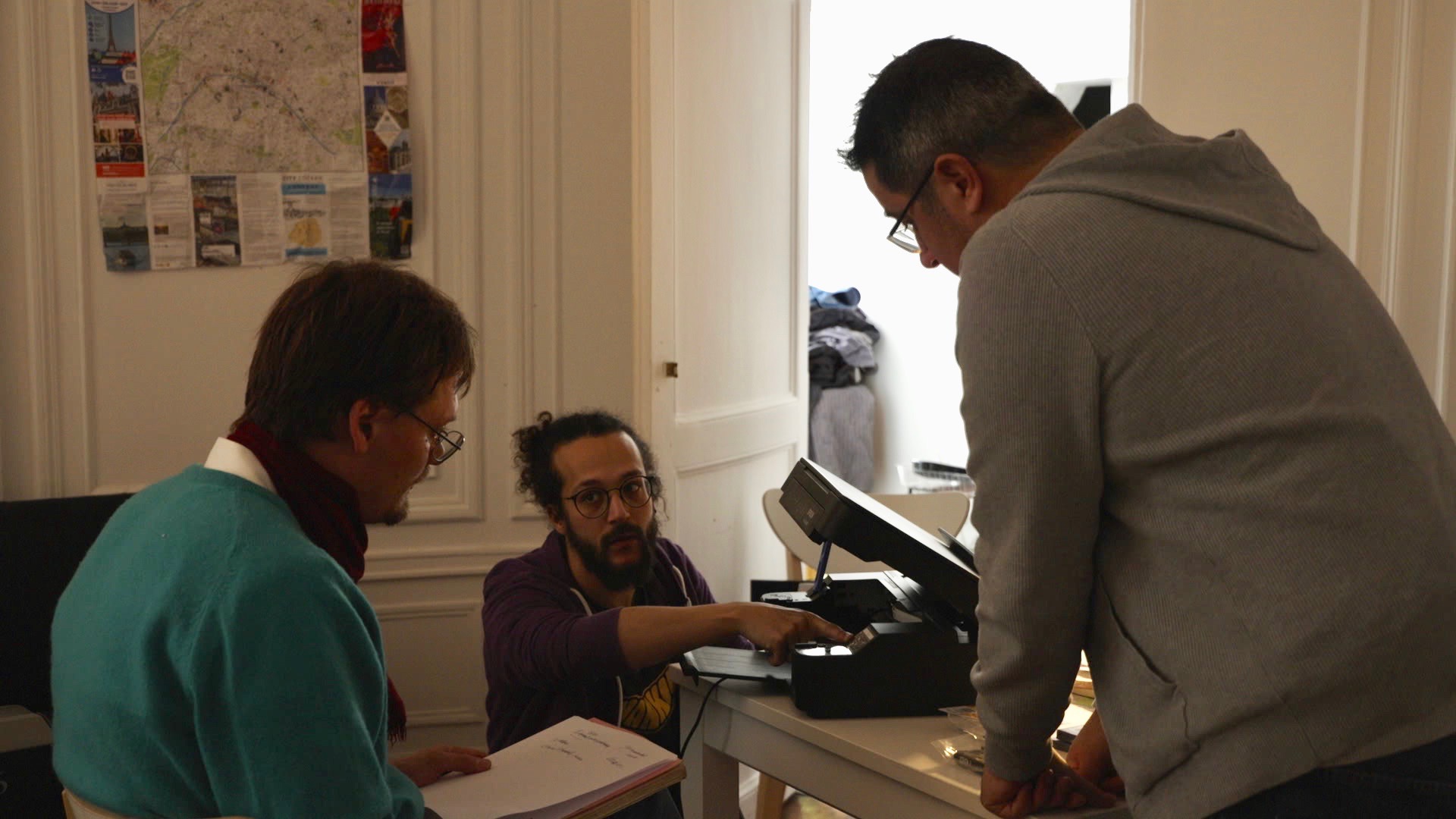
Third part of the triptych begun with On the Adamant and then Averroes & Rosa Parks, the film continues its exploration of the Paris Centre psychiatric district. Here, the filmmaker accompanies handy caregivers to the homes of some patients suddenly confronted with a domestic problem, a broken appliance, etc.
This film was made with the collaboration of Linda de Zitter.
Camera Nicolas Philibert, assisted by Rémi Jennequin, Pauline Pénichout • Sound François Abdelnour, Erik Ménard, Nicolas Philibert • Editing Nicolas Philibert, assisted by Janusz Baranek • Sound editing Jonas Orantin • Mix Emmanuel Croset • Colour grading Christophe Bousquet • Post-production coordination Delphine Passant • Producers Miléna Poylo & Gilles Sacuto, Céline Loiseau, assisted by Clément Reffo, Coline Perraudin, Saële Simon • A production TS Productions • With the participation of France Télévisions, Les Films du Losange, Universciné • With the support of Ciné+
With (in order of appearance) Patrice d’Hont, Walid Benziane, Goulven Cancouët, Muriel Thouron, Jérôme Délia, Ivan Vdovine, Gad Abécassis, Frédéric Prieur, Bruno Voillot, Céline Fogler
Distribution France & International sales Les Films du Losange
French theatrical release : April 17, 2024
Restoring souls, repairing objects, by Nicolas Philibert
One day, while filming on the Adamant, a carer told me that he and a few colleagues form a small group whose mission is to help patients when one of them has a problem at home: a leak, a piece of furniture to assemble, shelves to fix, an appliance that has broken down, etc. This aroused my curiosity. The small group is called “The Orchestra”. There are four or five members and they work in turn, two by two. Until then, I hadn’t really considered filming off the Adamant, but after all why not? I wanted to explore this avenue. A patient, Patrice, would soon provide me with the opportunity.
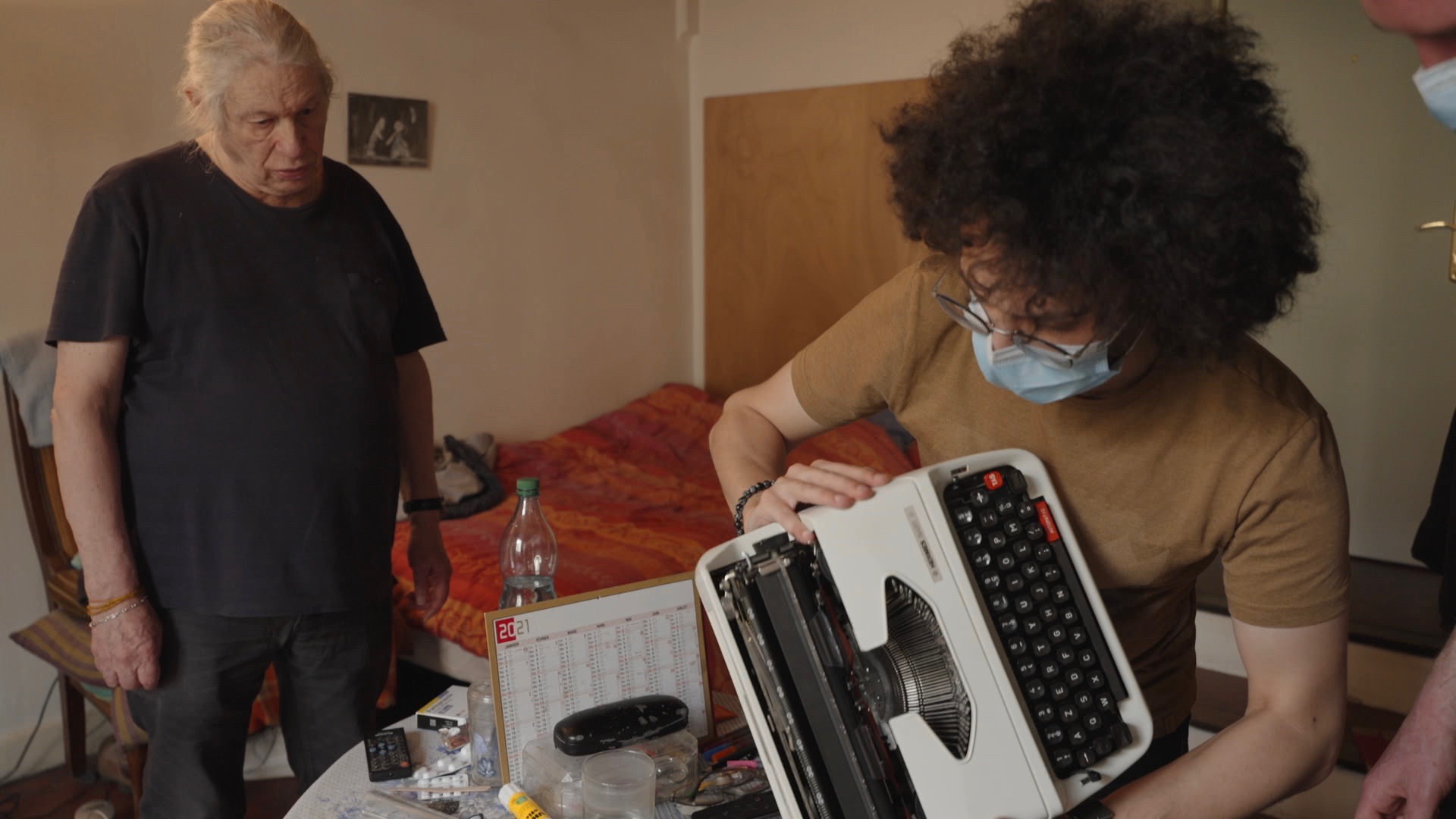
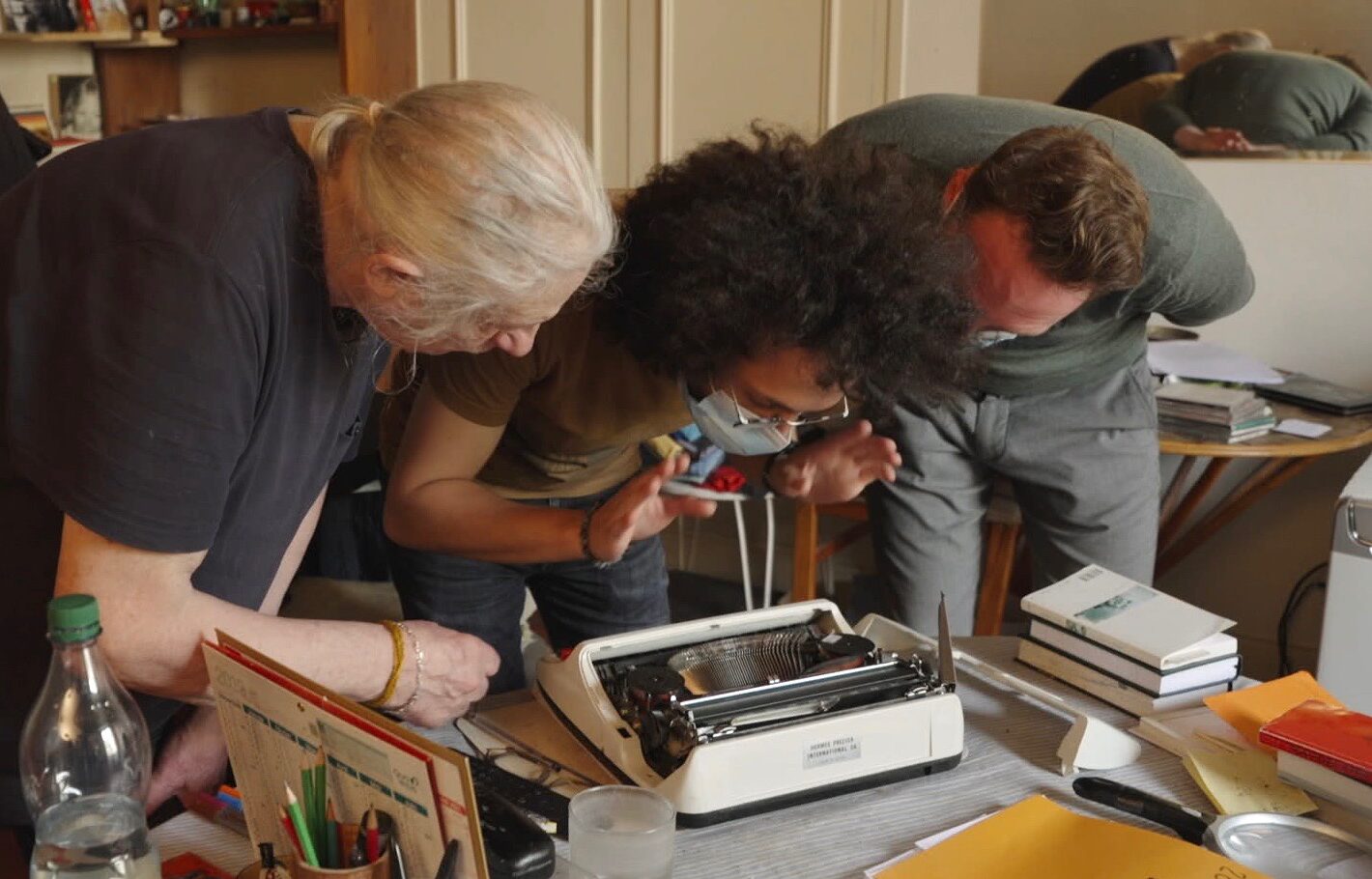
Patrice is an emblematic figure on the Adamant. Winter or summer, he arrives every morning as soon as the doors open, settles down at “his” table and immediately starts writing a poem in alexandrines. On getting home, he sits at his typewriter and transcribes the day’s poem. This daily activity seems to be what has kept him going for years. In his apartment, more than eight thousand poems are packed in folders. But then, one day, his typewriter jammed. As the days went by, the manuscripts stacked up. Patrice was in a terrible state. The Orchestra kicked into action. Walid and Goulven offered to drop in on him, but there was no guarantee of success: both in their thirties, they had only ever seen a typewriter in movies. They agreed to let me come along. Soon they were at work. I filmed and recorded a beautiful sequence.
For me, this first excursion led to others. The members of The Orchestra are regularly called upon, and other home visits awaited them. Restoring souls, repairing objects… Why not continue to follow them? At the same time, I had begun scouting the Averroès and Rosa Parks units at the Esquirol hospital, where some of the Adamant passengers I had filmed were residents and with whom I had a good relationship. The idea of making a triptych rather than a single film was beginning to haunt me. The three films would form a whole, while remaining independent of each other: you’d rediscover certain faces, you could see the films in any order, you wouldn’t have to see one to see the others.
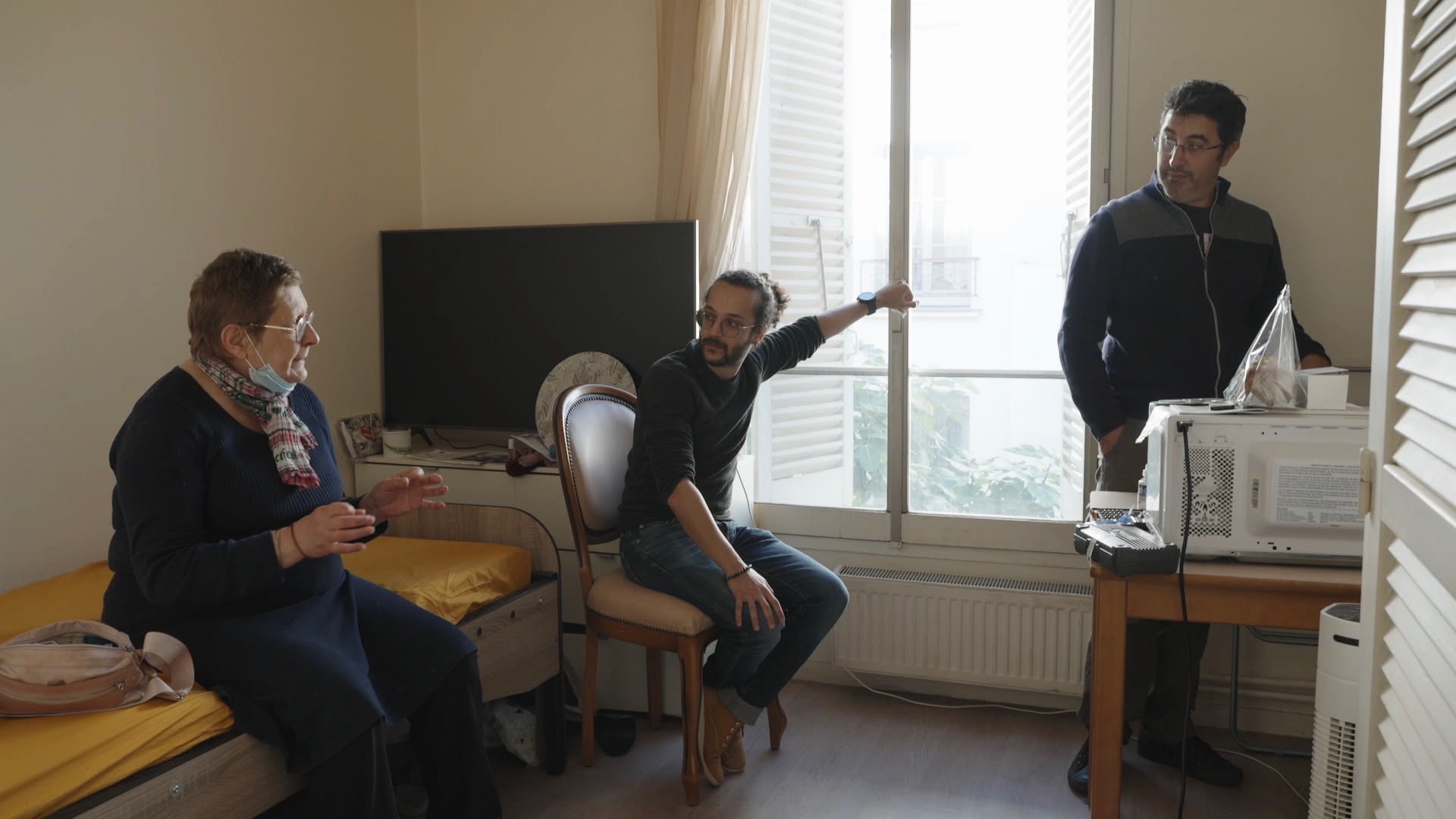
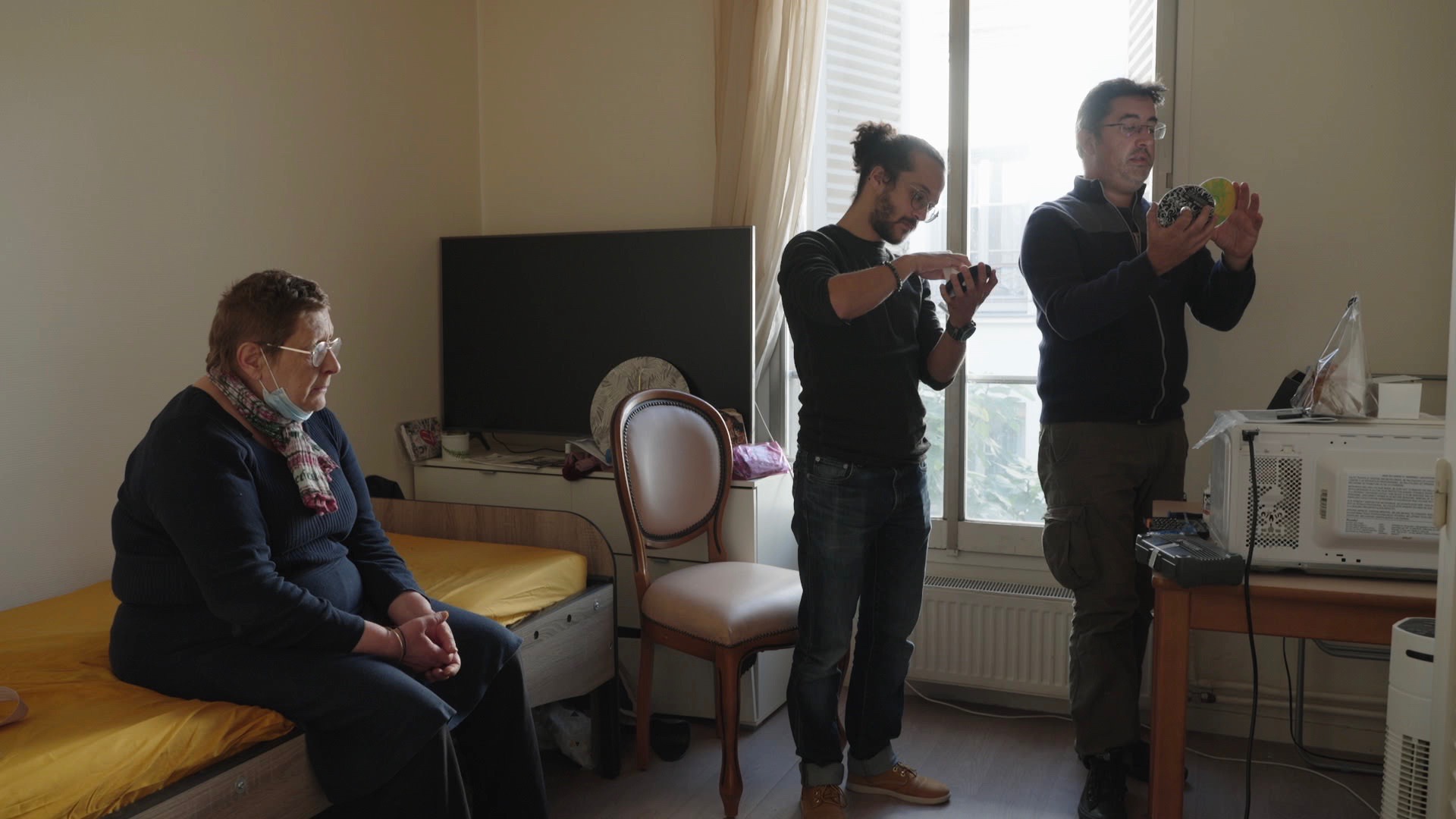
Muriel turned up on the Adamant one day totally devastated: her CD player had just given out on her. She had only been coming to the “boat” for a short while, but everyone had noticed her scathing sense of humour and sharp repartee. But now she was no longer laughing: without music, the days in the hostel where she lived were endless. The silence was unbearable and stressful for her. To relieve the boredom, she would turn on the radio, but it immediately “insulted” her. She felt threatened. Walid and this time Jérôme, another member of The Orchestra, offered to go and take a look. Muriel agreed to let me go with them. I had filmed her more than once on the Adamant and we had a good rapport. When the day came, I arrived a little earlier than them. The room was tiny: 9 m2 maximum. A bed, a chair, a table and this mini-stereo that had been acting up. We began chatting. I filmed her. She hoped they would carry out a miracle.
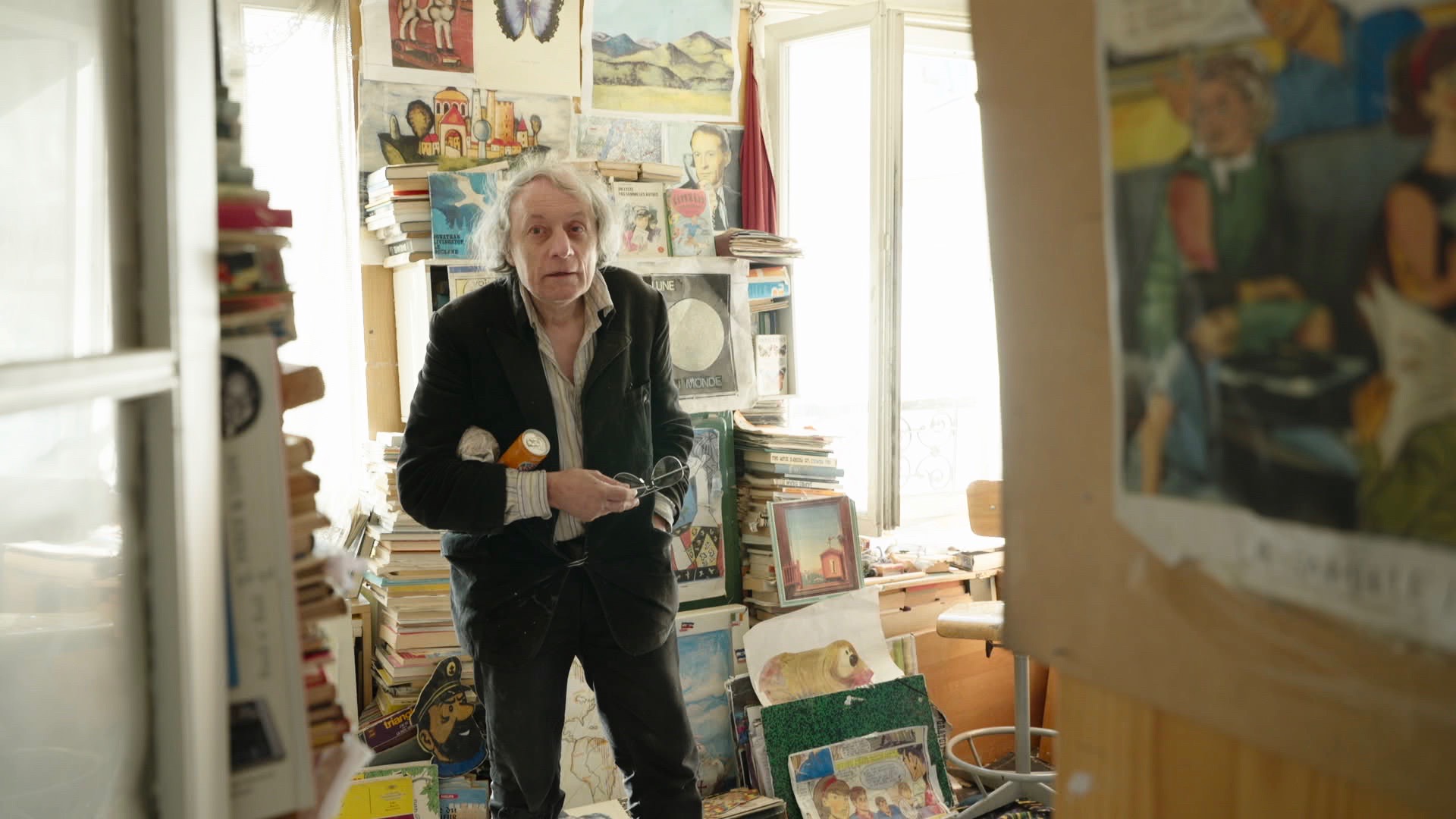
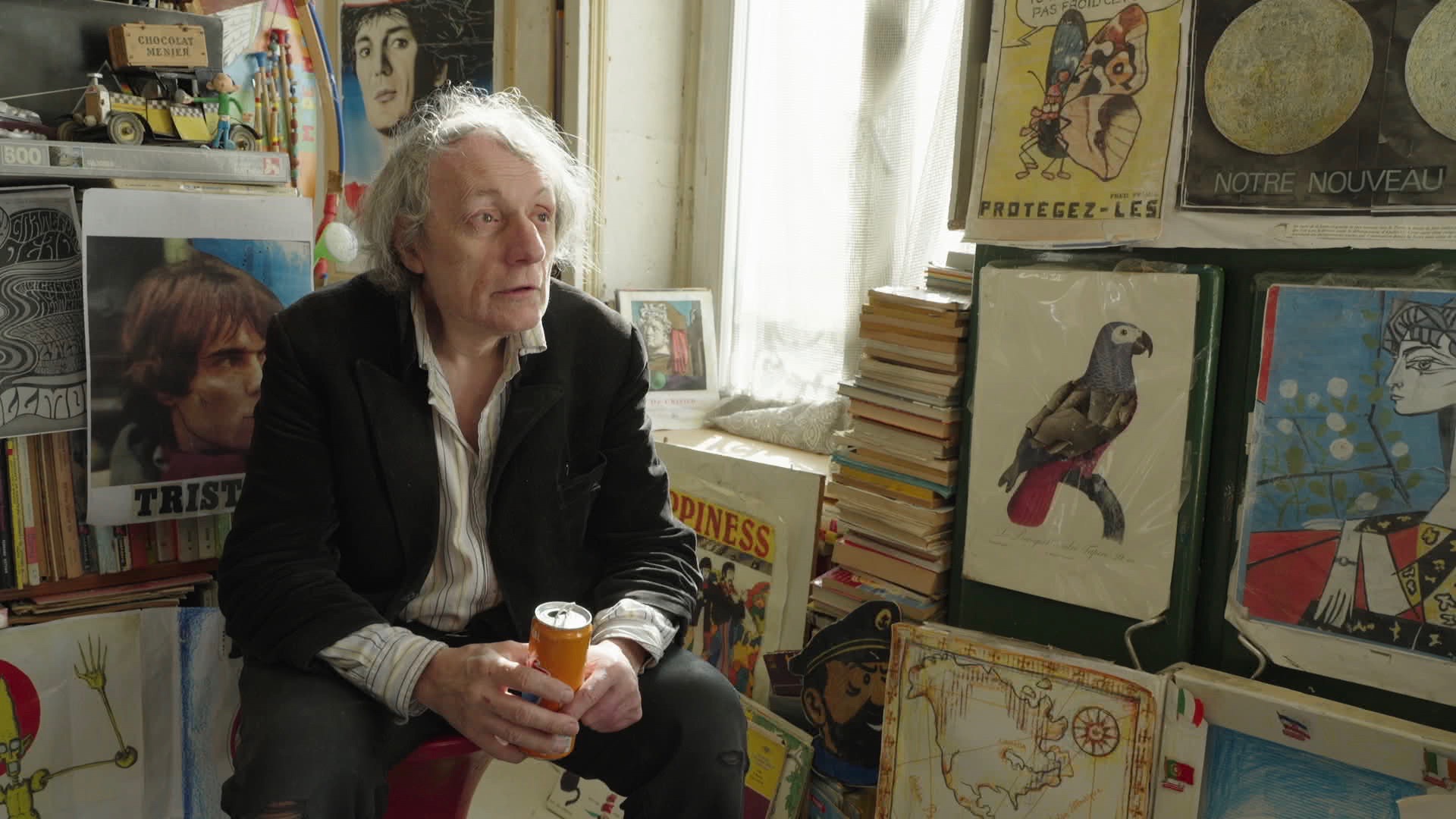
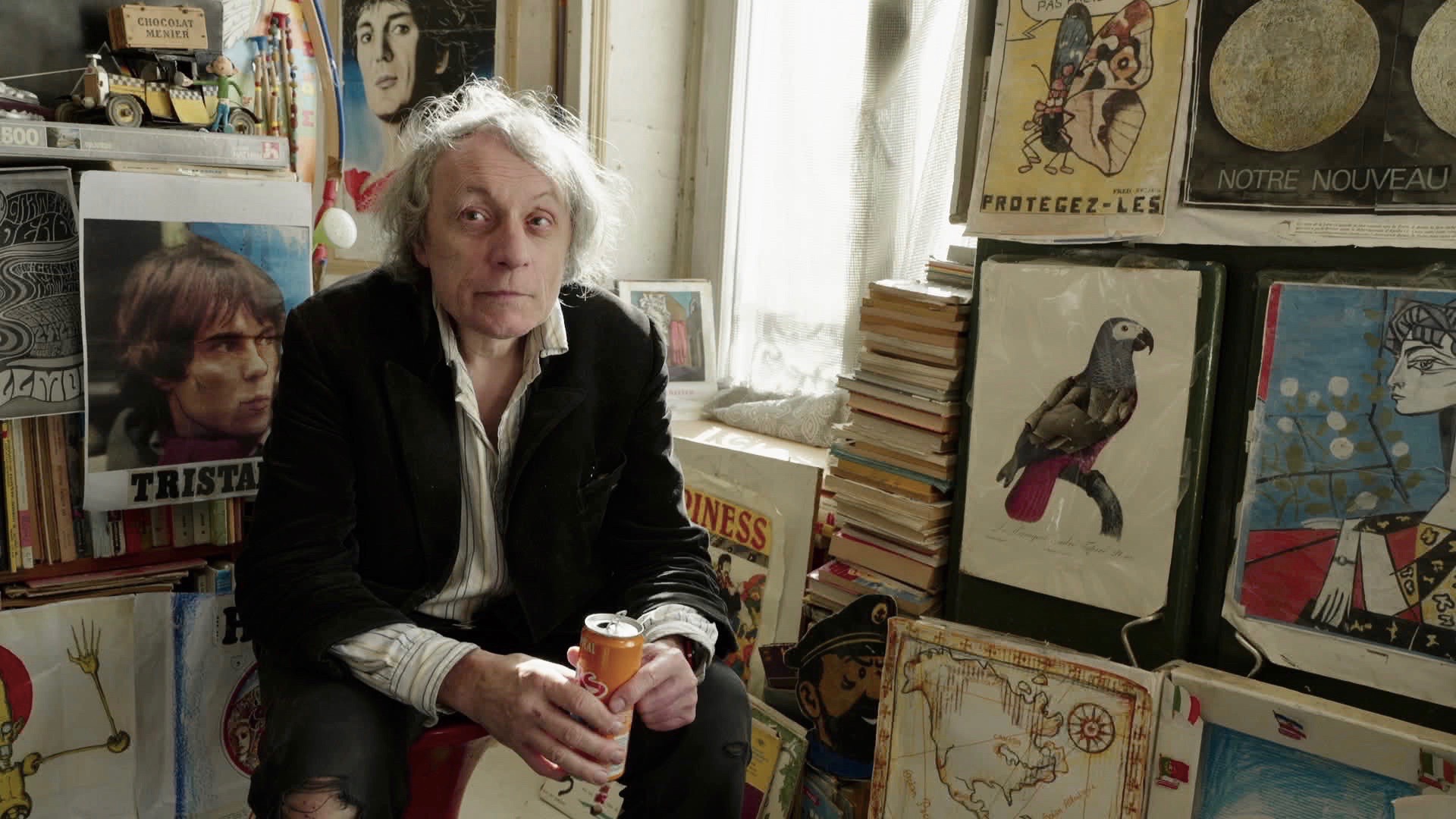
Another change of scene. I next went to see Frédéric, another key personage of the Adamant. Bruno and Céline were there to help him tidy up. It was hard to get around the teetering piles of books, art portfolios, vinyl records and objects of all kinds that filled his apartment – including the kitchen and bathroom – not to mention the comic strips, posters, collages and albums created by this former Applied Arts student, or the recordings and sound montages that he tirelessly creates and reworks on the little cassette recorder that never leaves his side. Frédéric? It’s hard to describe in just a few words this man locked up in his own world, a world frequented and inhabited by the Doors, Pink Floyd, Tintin, Baudelaire, Rimbaud, Apollinaire and Cocteau, Robert Bresson, Jacques Rivette, Wim Wenders and Agnès Varda, Van Gogh and Antonin Artaud – the list goes on and on! A man of great culture and multiple talents, one day a draughtsman, the next a musician, poet or cartoonist, and all the while a joker, affable, alert, hyper-sensitive and tender. You gradually realize that his reading of the world has become so influenced by these icons that he revisits everything, down to the smallest event in his life, in the light of their works and destinies, in a game of mirrors and correspondences that is continually reactivated.
After this last day of filming, I had the feeling that these three “visits” could almost make up a film in themselves, but I was obviously not there yet! I decided to let the mixture rest, and dived back into the Adamant project. Later, to get more material for this third film, I accompanied Bruno to Frédéric’s place two more times and also went back to Patrice’s for a conversation with him on my own. Finally, I accompanied two members of The Orchestra to Maisons Alfort to film another patient’s move to a new apartment.
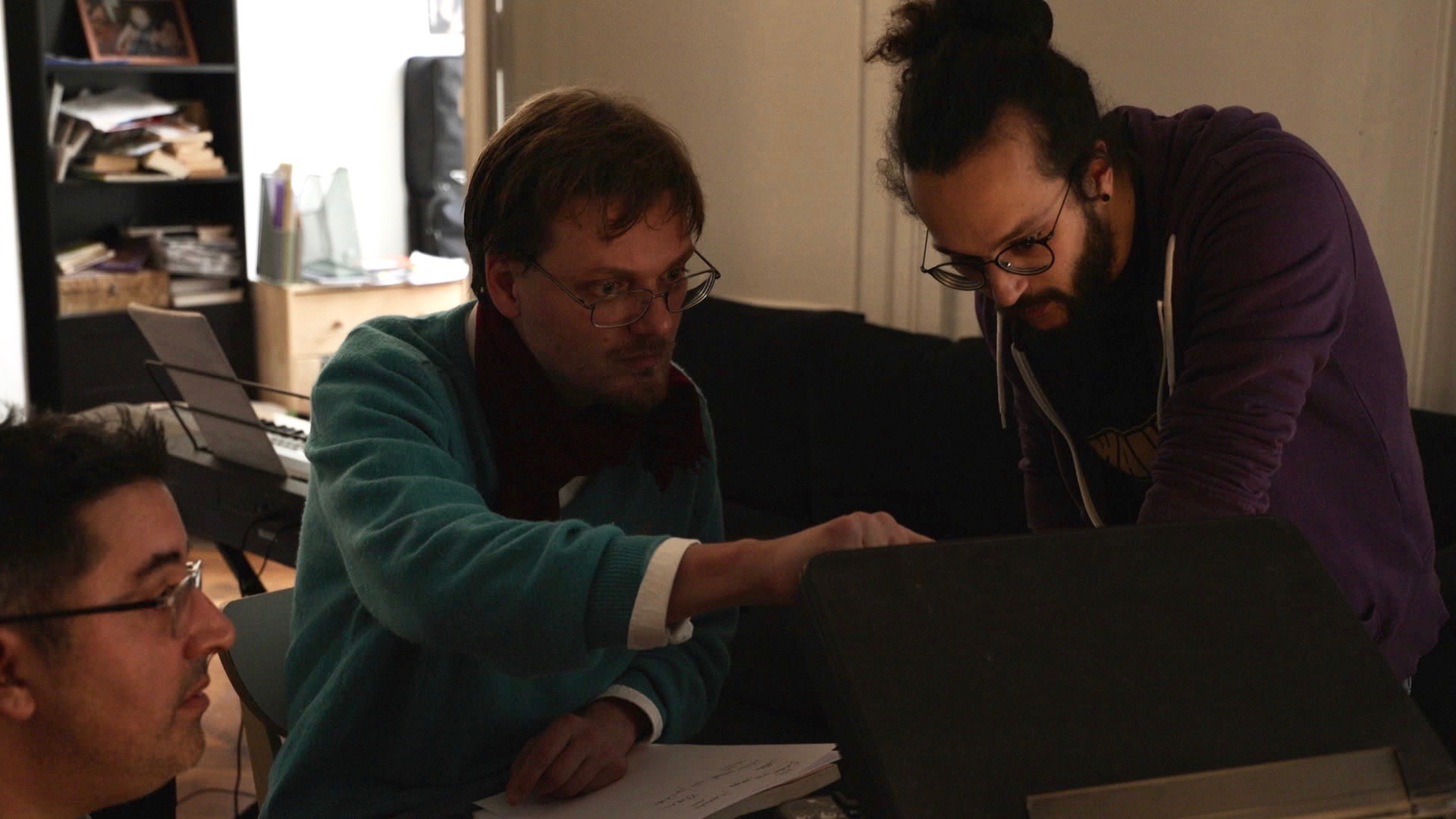
The end of filming and the editing of On the Adamant, its theatrical release in France and various foreign countries, and then the filming and editing of At Averroès & Rosa Parks would keep me away from this third opus for a long moment. In the autumn of 2023, between two trips, I got back in touch with Jérôme and Walid: I felt it was essential to film an additional visit to a younger patient. I put myself in their hands and waited for them to get back to me. At the end of November, they called me: they were about to go to see Ivan, who was having problems with his printer and DVD player. We set up an appointment. I met him, with them, on the Adamant. Ivan agreed to let me come and film at his place. Gad, his flatmate, surprised us by turning up in the middle of filming.
In late 2023, I had almost finished post-production on At Averroès & Rosa Parks. I urgently needed to edit and finalize this third film, which Les Films du Losange wanted to release in cinemas in April, shortly after the second one. I decided to keep only the three initial sequences, shot with Patrice, Muriel and Frédéric, which were the most spontaneous – the following ones seemed too “sedate” to me – as well, of course, as the most recent one shot at Ivan and Gad’s place. A few seconds of black would separate each visit from the previous one. I wanted this film to have a raw, fragile, handmade aspect, and I didn’t wish to add any music or embellishment of any kind.